I have something really special to share with you this week.
I sat down with Dr. Chai – a pediatric immunologist and allergy specialist – for a conversation about the thing that keeps so many new parents up at night:
Introducing allergens to your baby.
Dr. Chai and I worked together for years. She’s now in practice in Leichhardt, Sydney, and she spends her days helping families navigate food allergies and allergen introduction with evidence-based, practical guidance.
And in this interview, she answers EVERYTHING.
🎥 Watch or Listen First
If you prefer to watch or listen, you can start here:
Watch or Listen First
If you prefer to listen, you can start here:
Listen to the podcast here below:
Why Introducing Allergens Feels So Scary for Parents
If you’re a new parent, you’ve probably been told a dozen different things about allergen foods.
Avoid them.
Delay them.
Introduce them early — but carefully.
Only at home.
Only on certain days.
No wonder parents feel anxious and confused.
Dr Chai sees this every day in clinic — parents who want to do the right thing, but are paralysed by fear of getting it wrong.
Early introduction is KEY for allergy prevention.
One of the clearest messages from our conversation was this:
Early introduction matters.
Dr Chai explains that around 6 months of age, when babies are developmentally ready to start solids, is the optimal window to begin introducing common allergenic foods.
This includes foods like:
Delaying or avoiding these foods — unless there’s a medical reason — can actually increase the risk of developing food allergies.
This is backed by solid research – and Dr. Chai explains why.
PAUSE HERE, Get These Free Safety Tools
Before we go further, if you’re in the stage of introducing allergenic foods, these two free resources will support you immediately:
Free Resource 1: The Nest Weaning Blueprint
A simple, nurse-led guide including:
Allergy tracker
Top 9 allergenic foods
Choking first aid basics
Free Resource 2: Quick Reference Allergy Kit
Perfect for saving on your phone:
What allergy signs look like in an older child
What allergy signs look like in a baby & toddler
A list of questions for your GP or allergist
Now let’s talk about when a reaction becomes serious.
Why Avoidance Can Increase Allergy Risk
For a long time, families were advised to delay allergenic foods.
We now know that for most babies, this advice did more harm than good.
Dr Chai explains that when allergenic foods are avoided during infancy:
The immune system doesn’t get the chance to learn tolerance
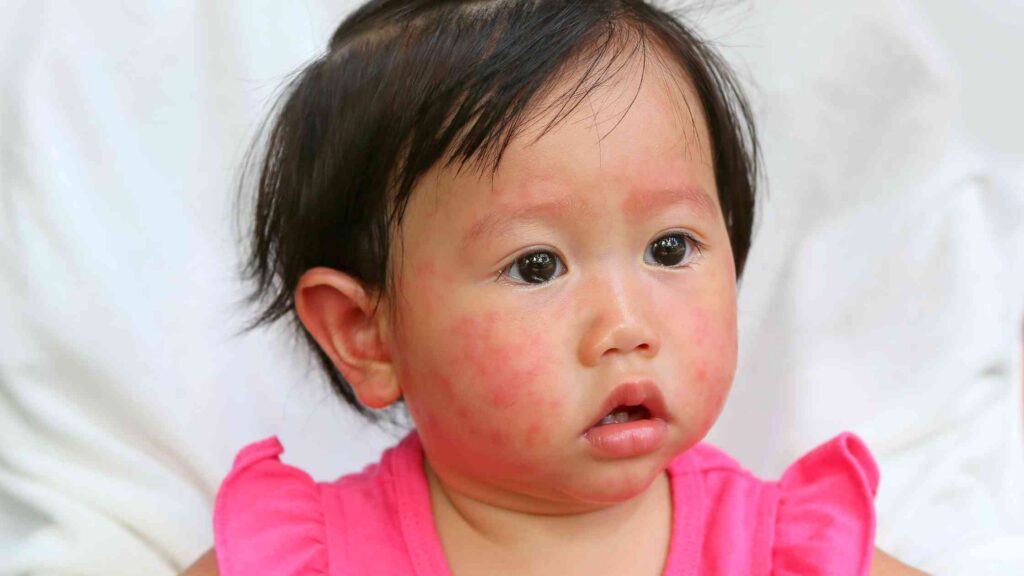
Sensitisation can occur through the skin (especially in babies with eczema)
The risk of food allergy increases
Introducing allergens orally, in age-appropriate forms, helps train the immune system in a protective way.
What “Early” Actually Means
Early doesn’t mean too early.
It means:
Your baby is around 6 months
They are developmentally ready for solids
They can sit with support and manage food safely
It’s not about rushing.
It’s about introducing allergens once solids have begun, rather than delaying for months or years out of fear.
Common Questions Parents Ask Dr Chai
During the interview, Dr Chai answered the questions she hears daily in clinic, including:
Should I introduce allergens one at a time?
How much do I give?
Her answers are calm, clear, and incredibly reassuring — especially for parents who feel overwhelmed by conflicting advice online.
You Don’t Need to Be Perfect — You Need to Be Informed
One of the things I loved most about this conversation is how practical it is.
Dr Chai isn’t asking parents to:
Be allergy experts
Memorise research papers
Follow rigid rules
She’s asking parents to:
Understand the why
Know what’s normal and what’s not
That shift alone takes so much pressure off.
Why Expert Conversations Like This Matter
There’s a lot of noise online.
What parents need is:
Evidence-based guidance
Clear explanations
Reassurance without minimising risk
That’s exactly what Dr Chai brings to this conversation — and why I’m so excited to share it with you.
Introducing allergens doesn’t need to be fear-fuelled.
With the right timing, the right information, and the right support, it can feel calm, intentional, and empowering.
If this interview helped you, share it with another parent who’s lying awake at night wondering if they’re doing the right thing.
You’re not alone — and you’re doing better than you think
Want Ongoing Support While You Feed Your Baby?
If you don’t want to navigate this alone, these memberships give you nurse-led support, education, and reassurance every month.
🌱 The NEST Feeding & Weaning Membership
For parents starting solids and allergenic foods:
Safe weaning guidance
Choking prevention
Allergy food introduction
Private, supportive community
👉 Join here:
https://thenestcpr.systeme.io/thenestmembership
🛡️ The Nest Food Allergy Membership
For families managing diagnosed or suspected allergies:
Nurse-led education
Real-life guidance
Ongoing support when questions pop up
👉 Join here:
https://thenestcpr.systeme.io/the-nest-allergy-membership
Introducing Allergens to Babies FAQs
When should allergens be introduced to babies?
Most babies can start allergenic foods around 6 months of age, once they are developmentally ready for solids. Early introduction, rather than delaying, helps reduce the risk of food allergies for most babies.
Should I delay allergen foods if my baby has eczema or a family history of allergies?
In most cases, no. Babies with eczema or a family history of allergies often benefit from earlier, carefully introduced allergens, ideally with guidance from a healthcare professional. Delaying allergens may actually increase allergy risk.
Do I need to introduce allergens one at a time?
When first starting, it’s helpful to introduce allergens one at a time and in small amounts, so you can clearly observe how your baby responds. Once tolerated, allergenic foods should stay regularly in the diet.